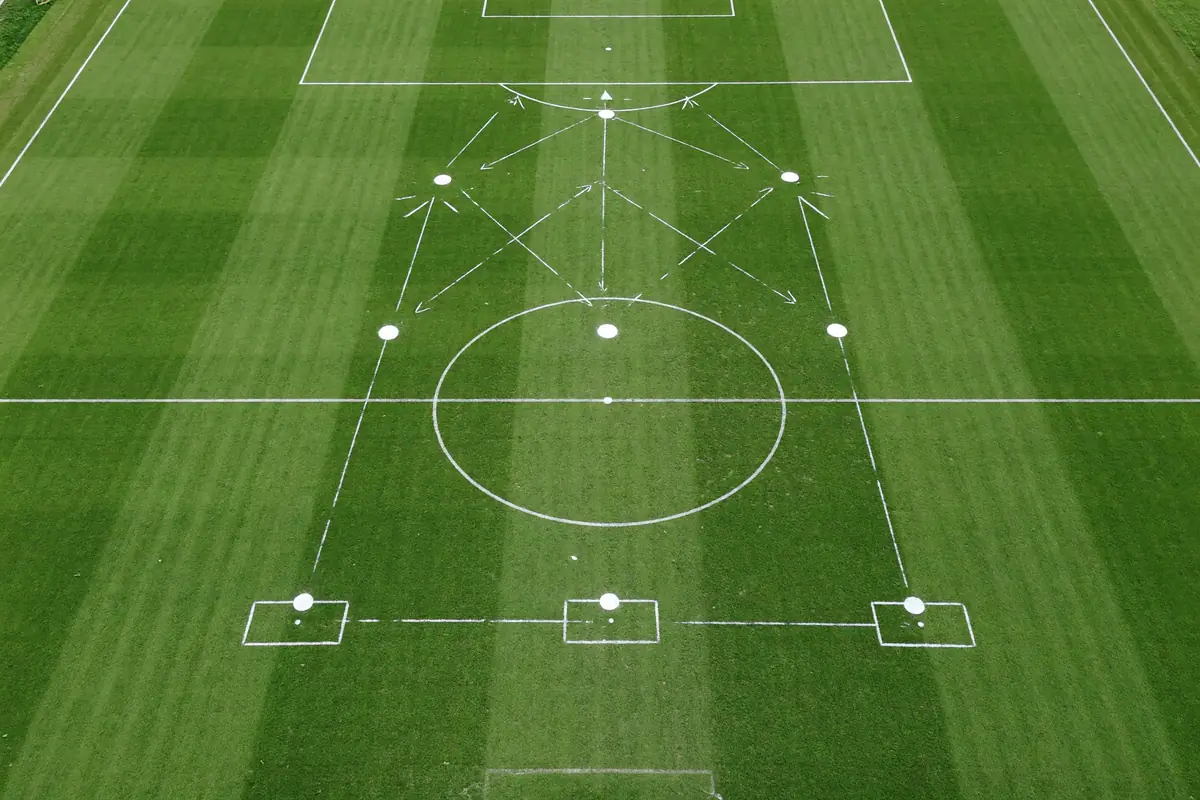
4-3-3
Three forwards, three midfielders, four defenders. The shape favours attacking output. The trade-off is midfield depth: with only three mids, a rotation or a yellow-card suspension leaves a hole. Best for managers with two premium forwards and three reliable mids.
4-4-2
Two forwards, four midfielders, four defenders. The most balanced shape across a long season. Captaincy is harder because there is no obvious premium target. A Unique centre-back scoring a clean sheet often wins the week.
3-5-2
Two forwards, five midfielders, three defenders. The highest-ceiling shape for attacking output. The trade-off is defensive fragility. Best when your five midfielders include two confirmed playmakers and your forwards are top-six finishers.
Rotation considerations
Choose a shape your card pool can sustain across a season. A 3-5-2 with only three reliable midfielders will collapse the moment one of them rotates. A 4-3-3 with only one premium forward is fragile. Build the shape around the cards you actually own.
Can I change formation mid-week?
Formation can be changed up to the captain lock. After the lock, the formation is fixed for the matchweek.
Which shape wins the most?
Across a season, the 4-4-2 has historically been the highest-floor shape. Across a single week, the 3-5-2 has the highest ceiling.
Are there other formations?
The platform supports additional shapes. The three above are the most resilient across a long season.